
Keeping radios alive when the grid is down
Every radio plan dies the same way: a drawer of mismatched dead batteries three days in. Power is the least glamorous and most decisive part of emergency communications. The plan below costs about $40.
The one rule: standardize
Chaos is owning devices that eat AA, AAA, CR123, 18650, and three proprietary packs. Buying-time decisions should already be made: prefer gear that runs on AA (the world's most available cell - when stores are stripped, the blister packs at the pharmacy counter are AAs), and hold a single stock of them in one known place.
- Weather radios: overwhelmingly AA or AAA backup. Fine.
- FRS radios: buy the models that take AAs, not only proprietary packs - the packs die at year three.
- Flashlights: AA versions exist of nearly everything.
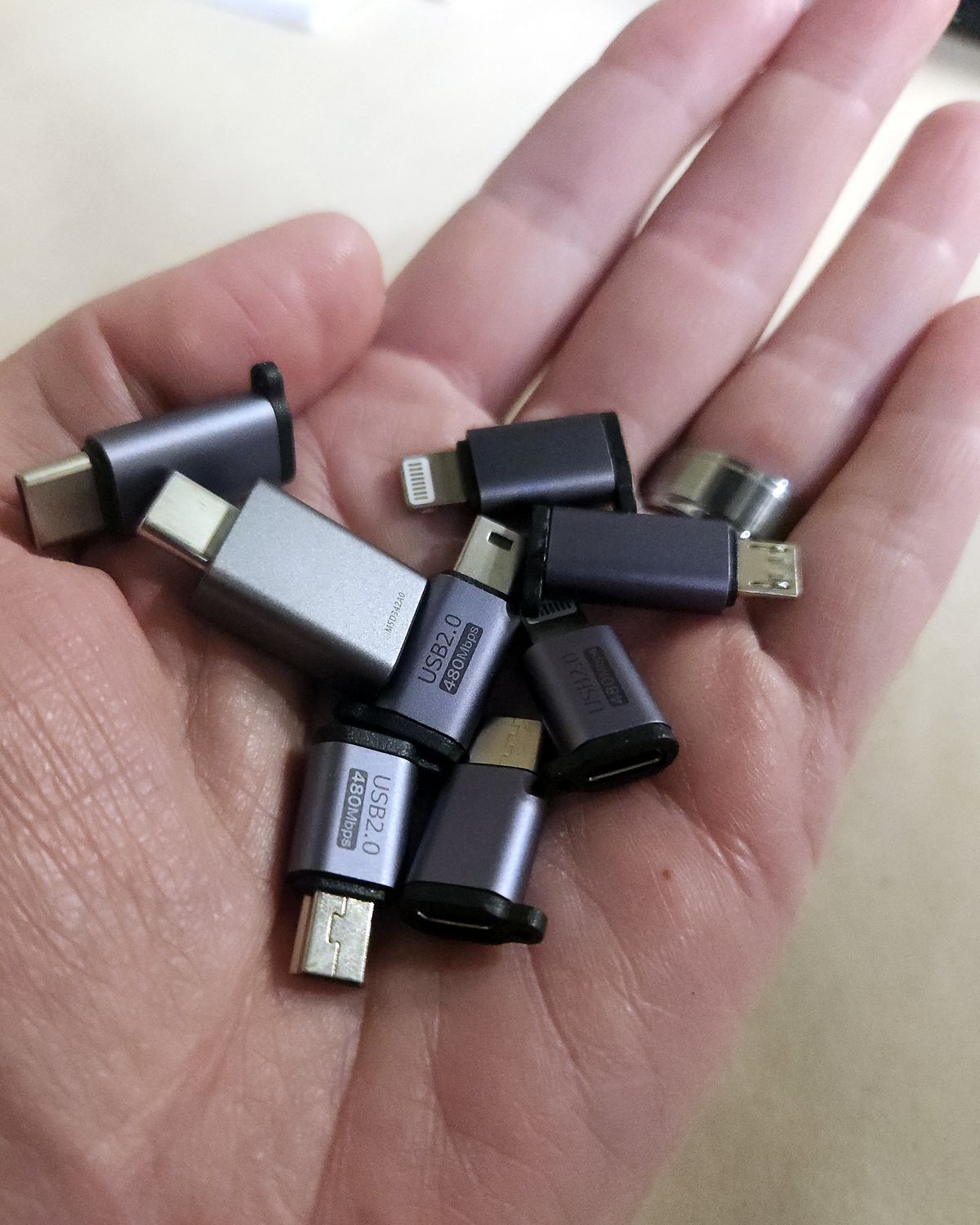
The same rule holds for ports. Your gear splits between USB-C and older USB, and in an outage the charger you can reach never matches the cable in your hand. A few USB adapters (Amazon) in the battery drawer end that problem for a few dollars.
Real-world run times
Rules of thumb from the logbook:
| Device | On a set of quality AAs |
|---|---|
| Weather radio, standby w/ alerts | days to a couple of weeks |
| Weather radio, speaker on | roughly a day, continuous |
| FRS handheld, mostly listening | a day or two of on-duty use |
| FRS handheld, lots of transmitting | hours, not days - transmit is what eats cells |
Two practical multipliers: earphones instead of speaker (several-fold on receive), and transmit discipline on FRS - short scheduled check-ins.
Which chemistry
- Lithium primary AAs (the storage champion): ~20-year shelf life, cold-weather tolerant, light. Costlier per cell - buy one dedicated emergency brick and don't raid it for TV remotes.
- NiMH rechargeables (the daily driver): low-self-discharge types hold ~70-80% for a year. Right answer for the FRS radios you also use camping - with a charger that does its job before the outage.
- Alkalines: cheap and everywhere; they leak in storage and ruin gear. If they're what's in the drawer, fine - but check them yearly and never store them inside the radio.
Power banks and the big-battery trap
A USB power bank (10,000-20,000 mAh, ~$20-40) recharges phones and USB radios repeatedly and is the single best watt-per-dollar in the kit. Keep it topped up on the same clock-change schedule as everything else.
The trap: all-in-one "radio + lantern + 20,000 mAh bank" bricks. One failure kills three tools, the radio inside is usually mediocre, and you can't hand the light to one person and the radio to another.
Solar panels? A folding 20-30W panel will recharge a power bank in a day of decent sun and earns its ~$50 in extended outages - a maintainer, not a substitute for stored cells in week one. (The tiny panel on a crank radio is a trickle by comparison.)
The battery you already own
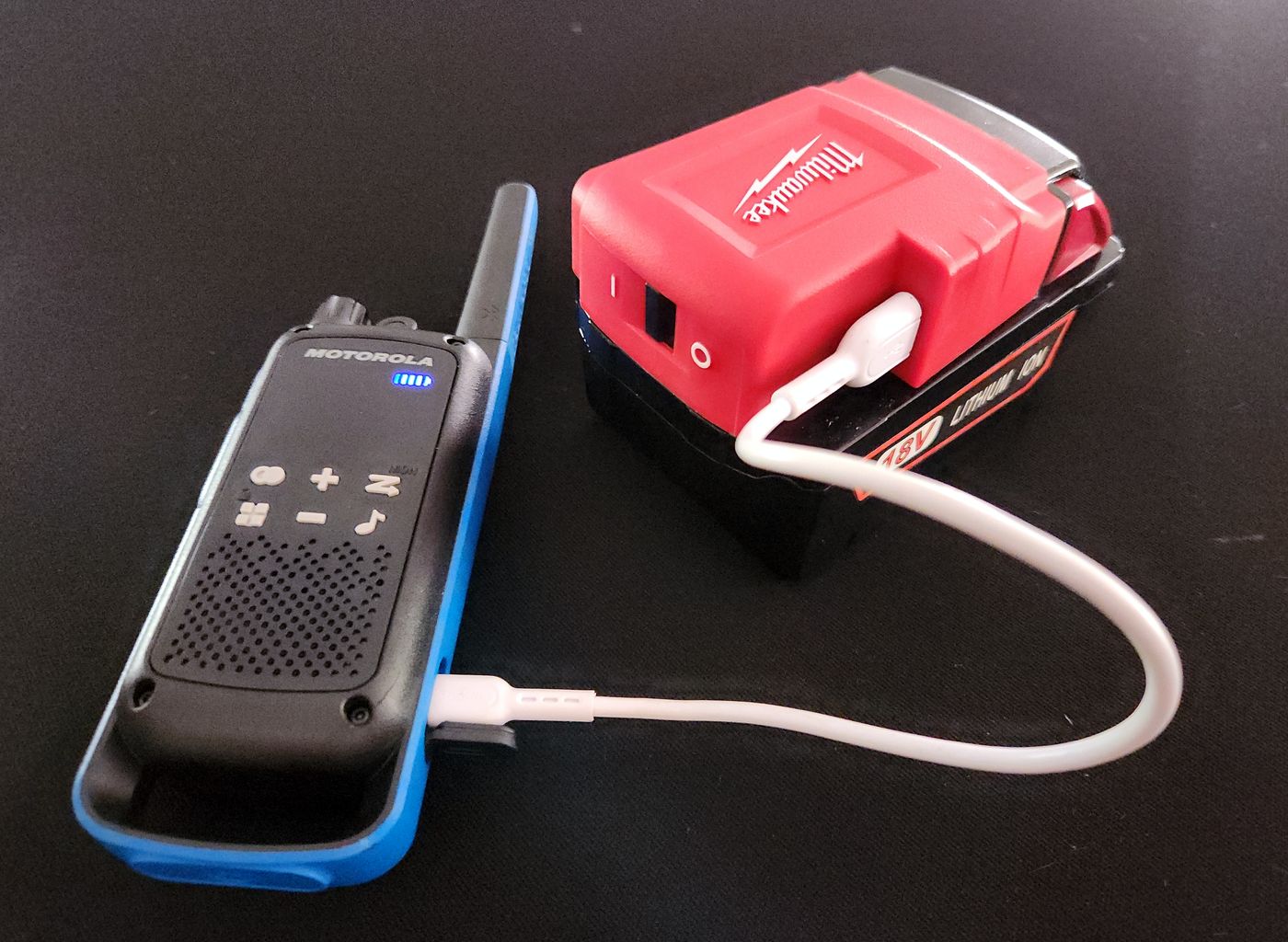
If there's a cordless drill in the garage, you may already own the best emergency battery in the house. One 18V 5Ah tool pack holds about 90 watt-hours - more than a typical 20,000 mAh power bank - and it's probably charged right now, because Tuesday's project needed it. What it can't do out of the box is talk USB.
The fix is a cross-brand adapter with USB out (Amazon) that snaps onto the pack the way a tool does. It charges phones and USB radios, and it doubles as a converter that lets DeWalt and Milwaukee batteries run Makita tools. Figure roughly four phone recharges per 5Ah pack, times however many packs live in the tool bag. Similar adapters exist for every major tool platform.
The complete $40 plan
- One brick of lithium AAs (8-12 cells), labeled EMERGENCY, in one known drawer - ~$20.
- One 10-20k mAh USB power bank, topped off at clock changes - ~$20.
- Every radio in the plan verified to run on AAs (or USB) before buying it.
- Earphones tossed in the go-bag - free range-extender for every battery you own.
Check the stack twice a year when the clocks change - same ritual as the weather radio test and the family plan review.