
FRS, GMRS, MURS, or ham: which does your family actually need?
The family-radio aisle is a wall of inflated range claims, and most online advice is written for a hobbyist's goals, not a family's. This is the walk-through we give neighbors.
The 30-second decision
- Household within a neighborhood → FRS. Done. ~$25-30/pair, no license.
- Family spread across a township / rural property / caravan trips → GMRS. One $35 license covers the whole family for 10 years.
- You specifically want the network-independent deep layer, and someone in the house will practice → an amateur (ham) license.
- MURS → a niche answer (VHF, five channels, license-free); fine for farm-and-field, but the ecosystem is thin. If you're asking, GMRS serves better.
New to these names? Start with the plain-English breakdown of CB, FRS, GMRS, and MURS - what each one is, and why FRS and GMRS share channels - then come back here to choose.
FRS: the license-free default
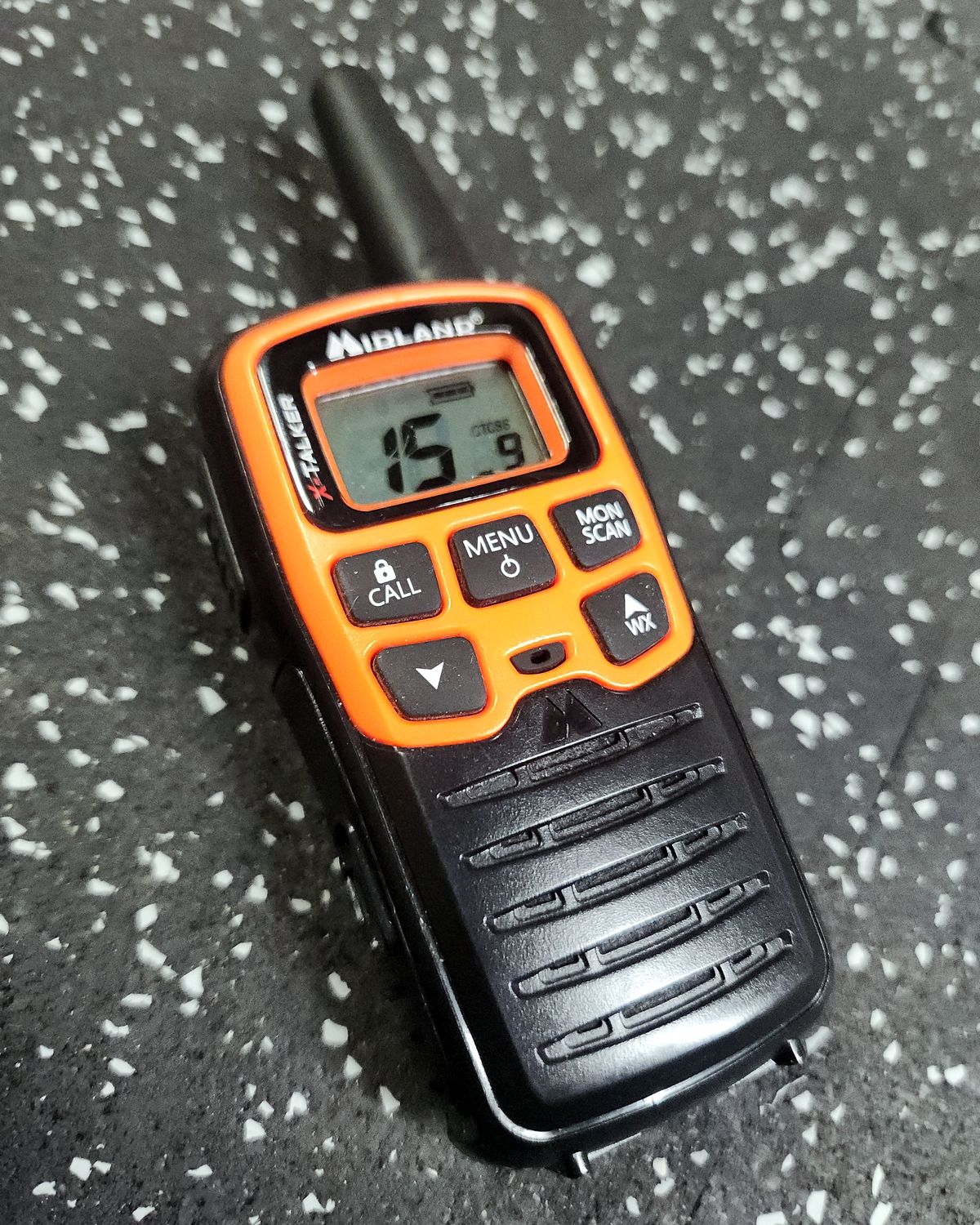
The bubble-pack walkie-talkies. Legal for anyone, no paperwork, 2 watts max on shared UHF channels.
The range truth: the "35 miles" on the package is a line-of-sight mountaintop fantasy (here's the physics of why). In a real neighborhood expect half a mile to two miles; suburban terrain, foliage, and houses set the limit, not the radio. That's enough for "household separated across a neighborhood," which is the actual emergency use case.
Buy any reputable pair, pick a channel, skip the "privacy codes" (they don't add privacy - they just mute you from hearing others on the channel; in an emergency you want to hear everyone). Write the channel on the family plan. And if you'd rather not invent a channel and a schedule from scratch, the 3-3-3 radio plan is the preparedness convention - channel 3, every three hours - so two radios actually meet without anyone being told when.
If you want a name to start from, the Midland T71VP3 (Amazon) is a plain FRS pair of the kind pictured above: 36 channels, NOAA weather scan, and nothing you'll pay extra for. Any reputable pair does the same job; this is simply a common one that doesn't oversell itself.
GMRS: the family workhorse
GMRS shares channels with FRS but allows up to 50 watts, external antennas, and repeaters (shared community towers that multiply range). The FCC license is $35, no exam, and covers your immediate family for ten years.
What it buys you in practice: reliable talk across a township with mobile units, and access to GMRS repeaters where they exist (coverage varies wildly by region - check what's active near you before counting on it). A sensible family setup is one base or mobile at home plus handhelds; total ~$150-250.
For the handheld half of that, the Midland GXT1000VP4 (Amazon) is the usual starting pair: 50 channels, NOAA weather alerting, rechargeable pack. Get the $35 license first. It takes minutes and needs no exam; transmitting on GMRS without it is the one part of this page that is not optional.
Amateur radio: the deep layer
A Technician-class ham license is a 35-question exam ($35 FCC fee plus a ~$15 exam-session fee - about $50 all-in, and one weekend of real study). It opens VHF/UHF repeaters - many with emergency power - plus the on-ramp to HF, digital modes, and the volunteer emergency networks (ARES, SKYWARN®) that pass traffic when regions go dark.
A license is worth exactly as much as the practice behind it. Used twice a year, it adds little in a crisis; a family that checks into a weekly net owns a layer nothing else on this page matches. If that appeals - and it's a rich hobby well beyond preparedness - here's what the exam is like and what the license unlocks. If it doesn't, FRS/GMRS plus a weather radio covers the realistic family need.
What about Baofengs?
The $25 Baofeng handheld is an amateur radio, which means transmitting on it requires a ham license - it is not legal (and since 2021-era rules, not even type-accepted) as an FRS/GMRS substitute. It's the wrong tool bought because it was cheap. Buy real FRS radios for the household.