
When the cell network dies: what actually still works
Every disaster after-action report tells the same story: the cell network didn't fail all at once - it degraded, got jammed by everyone calling at once, ran on tower batteries for a few hours, and then went quiet where the damage was worst.
Squeeze the phone correctly
Your phone is still the best tool you own for the first hours, if you use it like a radio operator instead of a caller:
- Text, don't call. A voice call needs a continuous channel; a text is a burst that can queue for minutes and slip through a jammed network. In nearly every major event, SMS delivers long after calls stop connecting.
- One out-of-area contact. Local circuits jam locally. A relative two states away often remains reachable - so everyone texts her, and she relays. This single arrangement outperforms most gear purchases, and it costs nothing. Put it in writing with our comm plan builder.
- Airplane mode between check-ins. A phone hunting for a dead tower burns its battery in a few hours. Scheduled check-ins (on the hour, say) can stretch one charge across days.
- Satellite SOS is real now. Recent iPhones and many Android flagships can reach emergency services - and in some cases send short messages - via satellite with no network at all. Know whether your phone can before you need it; find it in settings today.
- If you need the internet itself back - not just an SOS - a Starlink Mini running off a battery is the premium answer: full two-way internet with the cell towers down, from a dish that fits in a backpack. It's the most capable and most expensive option here, and it rides on top of the simpler layers.
The broadcast layer: information flows in
Two-way comes later. The first thing a household needs is accurate information - what happened, where it's going, whether to leave.
- NOAA Weather Radio is a nationwide network of over a thousand government transmitters on seven frequencies around 162.5 MHz, running on backup power, purpose-built to keep talking through exactly the events that kill cell service. A sub-$50 receiver with SAME county alerting wakes you for the warning that matters. It is the single highest-value emergency purchase most families can make. Find your county's frequency and SAME code, then see how to choose a receiver.
- AM/FM broadcast stations carry official information and have generators, engineers, and decades of practice. Any car radio works. Know your region's news-radio station by heart (in Chicago, it's WBBM 780).
The family layer: talking to each other
- FRS radios - the license-free "bubble pack" walkie-talkies - are underrated by hobbyists and overhyped on the box. Forget the "35-mile range": expect a few blocks to a couple of miles in a real neighborhood. That's exactly the range a separated household needs. Agree on a channel now, write it on the plan, and they'll do their job - and for a listening schedule so two radios meet without a working phone to coordinate, the 3-3-3 plan is the common convention. No license, ~$25-30 a pair.
- GMRS uses better radios at higher power (and shared channels with FRS), with one $35 license covering your whole family for ten years. If your people are spread across a township rather than a block, this is the sensible upgrade. Details in the family radio guide.
The deep layer: amateur radio
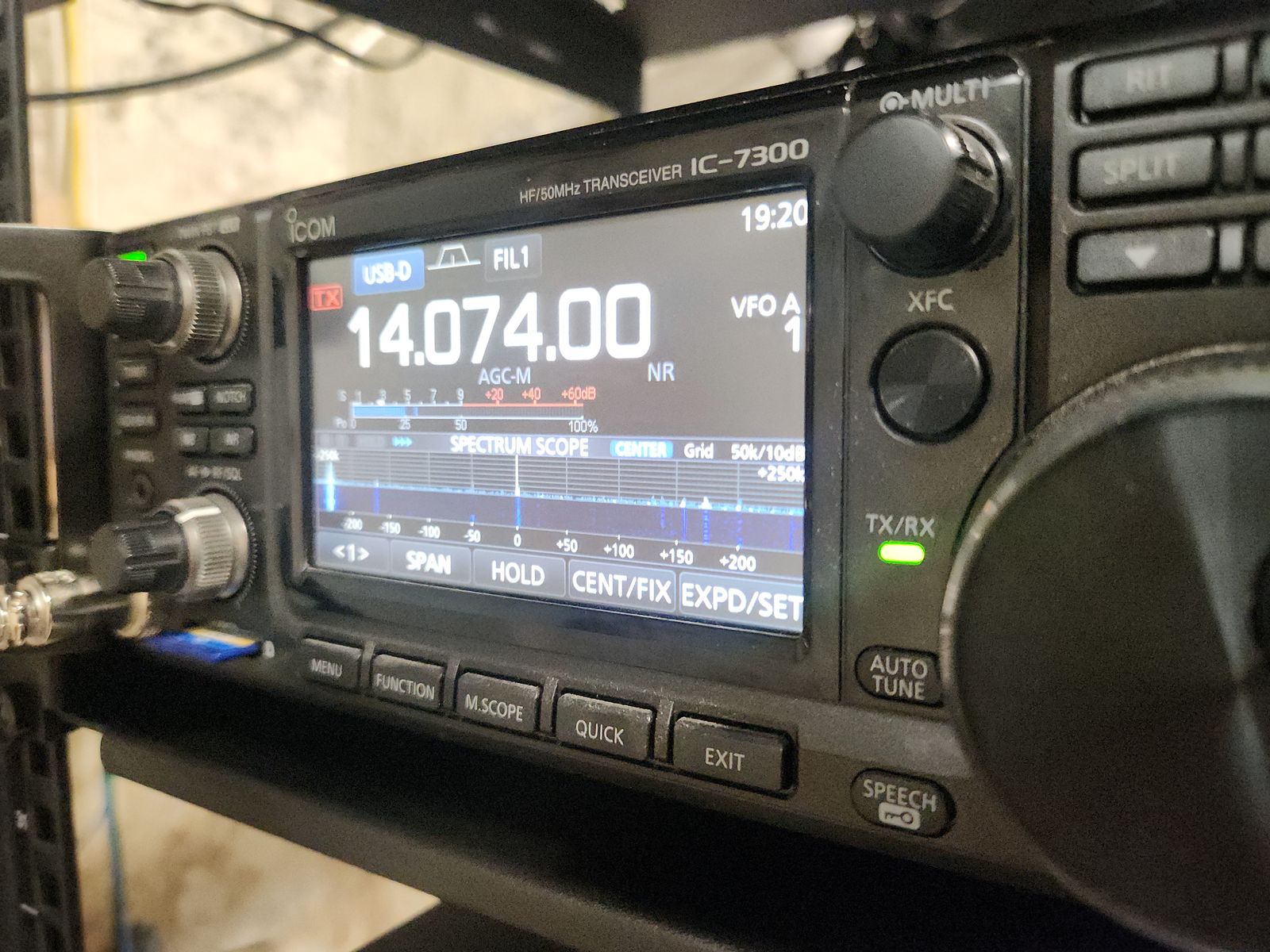
Amateur (ham) radio is what remains when everything else is gone - the layer that passed traffic out of Puerto Rico after Maria and out of western North Carolina after Helene. With no infrastructure at all, a licensed operator with a $35 handheld can reach local repeaters (many with generators); with modest HF gear, other states and countries.
From someone who does it weekly: ham radio is a skill, not a purchase. The Technician license exam is easy (35 questions, about $50 in fees, a weekend of study), but the ability that matters is built by using the radio before the emergency. If that interests you - and it's a rewarding hobby beyond preparedness - start with the license path. If it doesn't, that's fine: the layers above cover the realistic needs of most families.
What we'd tell a neighbor to do this weekend
- Set up the out-of-area contact and print the family plan. Free.
- Buy and program a SAME weather radio (~$30-50). Your codes are here.
- Buy a pair of FRS radios (~$25-30), pick a channel, tape a spare set of batteries to them.
- Check whether your phone has satellite SOS, and show the household how it works.
That's a complete, realistic communications plan for under $100 - and every piece of it works with dead cell towers.